
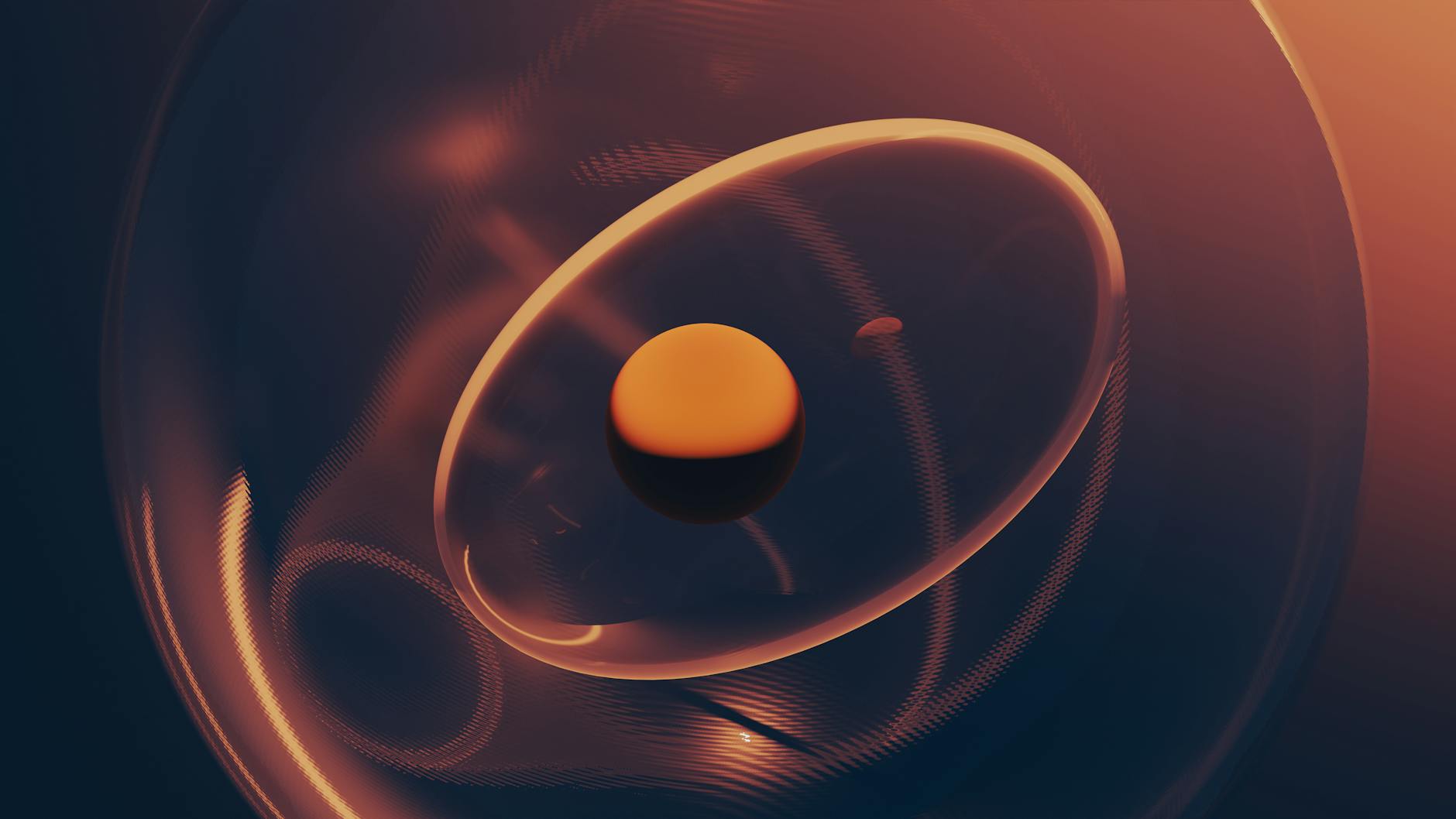
What is an atom?
In previous posts, we talked about crystal structures like BCC, FCC, and HCP. These structures describe how particles are arranged inside solid materials. But what are these particles?
They are atoms. When we draw a BCC or FCC lattice, we are really showing how atoms are positioned in space. To understand materials better, we first need to understand: what is an atom?
An atom is the smallest unit of matter that still behaves like a specific element, such as iron, copper, or carbon. Atoms are incredibly small: you cannot see them even with the most powerful optical microscopes.
Every solid, liquid, or gas is made of atoms arranged in different ways.

Is an Atom Made of Smaller Parts?
Yes. An atom is not solid all the way through. It is made of even smaller components:
- Protons – positively charged particles
- Neutrons – particles with no electric charge
- Electrons – very light, negatively charged particles that move around the center
Protons and neutrons sit in the nucleus, while electrons occupy the space around it. Most of the atom is actually empty space.
Why atoms form structures?
Atoms interact with each other through electric forces. These interactions decide:
- how close atoms sit together
- how they arrange themselves
- which crystal structure forms (BCC, FCC, HCP, or others)
So crystal structures are not abstract shapes: they are the result of how atoms and their electrons interact.
From atoms come crystal structures, and from crystal structures come material properties like strength, hardness, and conductivity. By understanding atoms, we take the first step toward understanding why materials behave the way they do.
Visualization corner – imagine a BCC or FCC lattice made of tiny balls. Each ball is an atom. Now zoom in on just one ball. Zoom in more… and more… You see a tiny dense center (the nucleus), with electrons moving around it, leaving lots of empty space in between.

Leave a Reply